Restorative
Revitalize Function
Our specialized team will help you enjoy all of your favorite foods again, restore your oral health, and preserve your facial structure.


Both options can effectively replace missing teeth, and implant-retained dentures offer a solution that combines features of both. At DH Dental & Prosthodontics in Reston, VA, we evaluate your oral health, jawbone, number of missing teeth, lifestyle, budget, and long-term goals to help determine which tooth replacement option is right for you.
When you are missing multiple teeth, choosing the right tooth replacement option can have a significant impact on how you eat, speak, smile, and maintain your oral health. Two of the most common solutions are dentures and dental implants. While both can restore missing teeth, they work in very different ways.
At DH Dental & Prosthodontics in Reston, VA, we offer both dentures and dental implants, including implant-retained dentures. The right choice depends on several factors, including how many teeth you are missing, the health and density of your jawbone, your lifestyle, your budget, and your long-term goals. Because every smile is different, we evaluate these factors carefully before recommending a treatment plan.
Traditional dentures are removable dental prosthetics designed to replace missing teeth. Full dentures can replace an entire arch of teeth, while partial dentures can be used when some healthy natural teeth remain.
One of the primary advantages of conventional dentures is that they do not require implants to be surgically placed into the jaw. This can make them an appropriate option for patients who prefer a removable solution, are working within a particular budget, or may not be candidates for implant treatment.
Because traditional dentures are removable and rest on the gums rather than being anchored into the jawbone, there can be an adjustment period. Patients may initially notice changes in speech, chewing, taste, or saliva production. Over time, most patients become increasingly comfortable using their dentures.
Dentures also require ongoing care. They should be cleaned daily and removed as directed to keep the appliance and surrounding oral tissues healthy. Their fit can change over time as the mouth and jaw change, which is why regular dental evaluations remain important even if you no longer have natural teeth.
Dental implants take a different approach to replacing teeth because they are supported by the jawbone. An implant is a small titanium post surgically placed into the jaw, where it functions as a foundation for a replacement tooth or teeth.
This connection to the jawbone is one of the biggest differences between implants and conventional dentures. Rather than simply resting on the gums, implants provide a stable foundation for the dental restoration.
At DH Dental & Prosthodontics, dental implant treatment is specialist-led by our prosthodontist, Dr. Dong-Soo Hong. Prosthodontists receive additional advanced training focused on restoring and replacing teeth, making this expertise particularly valuable when evaluating complex tooth replacement needs.
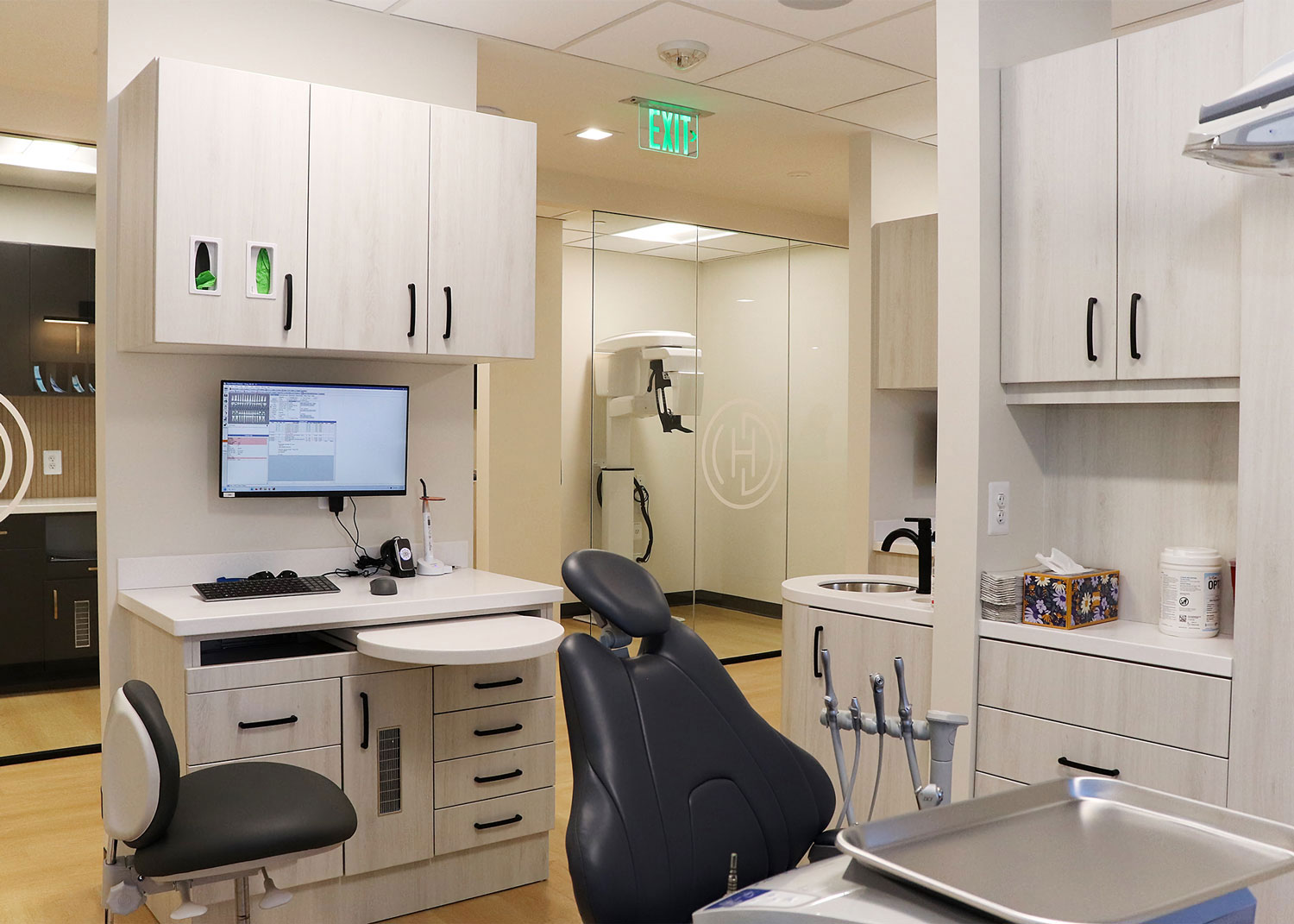
We also use advanced technology, including CBCT imaging when necessary, to evaluate the teeth, jawbone, nerves, sinuses, and surrounding structures when planning implant treatment.
For many patients comparing dentures versus implants, stability is one of the most noticeable differences.
Conventional dentures are removable, which means they can potentially shift during eating or speaking. Patients often need time to learn how to chew comfortably with them, and certain foods may be more challenging.
Dental implants are anchored within the jawbone, creating greater stability. This can provide increased confidence when eating, speaking, and going about everyday activities. For patients who have struggled with loose or uncomfortable traditional dentures, implants may provide an alternative worth considering.
There is also a middle ground between these two options. Implant-retained dentures combine a denture restoration with dental implants. Rather than relying entirely on the gums for support, the denture attaches to surgically placed implants for improved stability. This can be an excellent option for certain patients who need to replace many or all of their teeth.
Another important difference involves the jawbone.
Natural tooth roots stimulate the surrounding bone. After teeth are lost, the jawbone in that area can gradually change because those roots are no longer present. Traditional removable dentures replace the visible portion of missing teeth, but they do not replace tooth roots within the jawbone.
Dental implants interact with the jawbone more like natural tooth roots because they are surgically placed into the bone. This can help provide support for the jaw and is one reason implants are frequently considered when developing a long-term tooth replacement plan.
However, sufficient bone is necessary to support an implant. If the jawbone has deteriorated or is too thin, bone grafting may be necessary before or as part of implant treatment. A detailed examination allows us to determine whether your jaw can support implants and what treatment approach makes the most sense.
Traditional dentures generally do not require implant surgery, while dental implants involve surgical placement. This means the treatment timelines and processes can be very different.
Dentures are custom-made to fit your mouth and restore your smile. Dental implant treatment requires careful evaluation and planning because the implants must be positioned within the jawbone.
At our Reston dental office, we use modern digital technology to help plan restorative and implant treatment with precision. Your individual treatment timeline will depend on your oral health, the number of teeth being replaced, bone quality, and the type of restoration being used.
Both dentures and dental implants require good oral hygiene and professional dental care.
Removable dentures should be cleaned every day and properly stored when they are not being worn. They also need to be periodically evaluated because changes in your gums and jawbone can affect their fit.
Implants also require consistent oral hygiene. Although an implant itself cannot develop a cavity, the gums and tissues surrounding it need to remain healthy. Regular professional examinations and cleanings remain an important part of protecting your investment and overall oral health.
There is no single answer that is right for everyone. Traditional dentures can provide an effective and more budget-conscious way to replace multiple missing teeth. Dental implants can provide increased stability, comfort, functionality, and support for the jawbone. Implant-retained dentures offer another option that combines features of both approaches.
At DH Dental & Prosthodontics in Reston, we consider your oral health, jawbone density, number of missing teeth, budget, lifestyle, and personal preferences before recommending treatment. Our goal is not simply to replace missing teeth, but to help you find a solution that supports comfortable function, oral health, and confidence for years to come.
If you are deciding between dentures and dental implants, scheduling a personalized consultation is the best place to start. We can examine your smile, discuss your concerns, review your options, and help you understand which approach is most appropriate for your individual needs.
Our specialized team will help you enjoy all of your favorite foods again, restore your oral health, and preserve your facial structure.

We combine the art and science of dentistry to offer solutions that not only improve your appearance but also contribute to your overall oral health.

Everything you need to maintain perfect oral health. We’re a trusted dental home for all your routine dental services.




We work with:










"I'm proud to be your trusted Reston general dentist and prosthodontist. I have a passion to help you maintain excellent oral health."
— Dr. Hong
Schedule Now